
Spasticity, contractures and muscle shortening
 Spasticity,
Spasticity causes pain, contractures, bone deformities and tendon shortening, which are particularly critical during growth spurts. We cannot say it often enough: the best remedy remains physical activity, for many reasons: strengthening the agonist muscles, stretching, mobilising the joints, etc. But there are other complementary approaches to minimise the effects of spasticity.
First of all, a few definitions:
- An antagonist muscle: during a movement, the agonist muscle is the main muscle used to perform it; the antagonist muscle is at rest while the agonist works. The antagonist is stretched when the agonist contracts, and vice versa.
- Spasticity: a spastic muscle is in a state of permanent contraction and never relaxes. Hence the difficulties when the antagonist muscle, which should be at rest, is spastic…
- A contracture: muscle pain that persists even at rest is often a sign of a muscle contracture. When you touch the muscle, it is hard and stiff. Poor postures caused by spasticity and muscle weakness are often the cause.
- Musculotendinous shortening (retraction): the stiffening of joints due to the shortening of ligaments, tendons and muscles. It is diagnosed by observing the joint’s maximum range of motion. Once established, shortening is irreversible without surgery.
Stretching
The main aim of stretching is to limit the joint stiffness caused by spasticity, maintain a good range of motion and prevent muscle shortening, which has negative consequences for mobility and walking.
Does it work? Some scientific studies conclude that the benefit is limited and therefore does not justify physiotherapy sessions consisting mostly of stretching.


Here is what we have observed:
- Passive stretching done by someone else while lying down, as practised by French physiotherapists, does indeed have a modest effect that does not last.
- Passive stretching while standing turns out to be more effective, because it is helped by gravity (standing on a tilted board, or hands on the floor with straight legs).
- Passive stretching while lying down with night splints works through duration of exposure. It helps preserve range of motion but is hard for children to tolerate.
- Active stretching should be preferred, with an emphasis on variety: some Medek exercises are particularly suited to this, but physical exercise in general stretches certain muscle groups.
In any case, these exercises should be done daily or very regularly (at least 3 times a week). Our recommendation: don’t neglect them, especially during growth spurts. Note: they are necessary but not sufficient!
The Exopulse Mollii suit
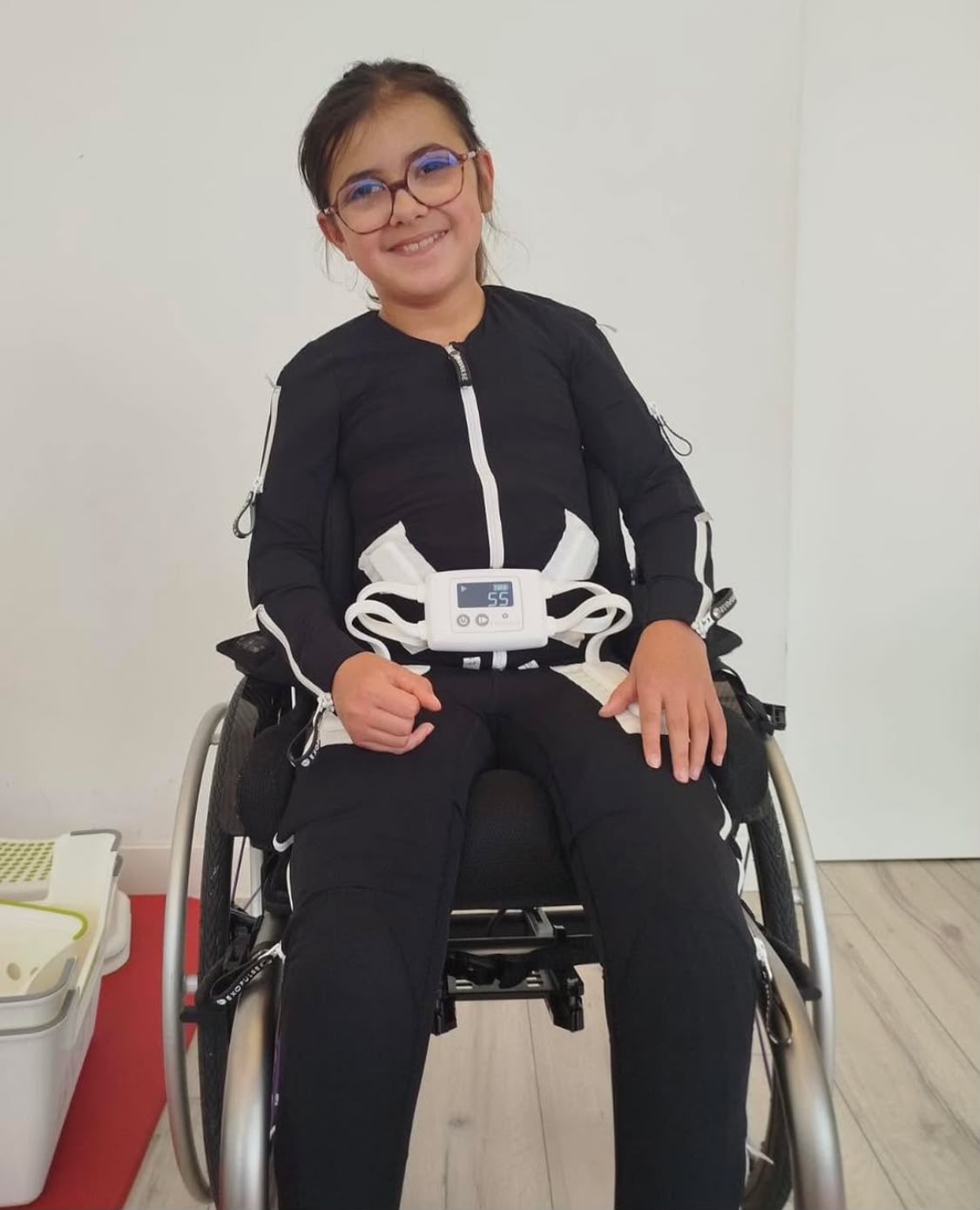
The Mollii suit helps children and adults with cerebral palsy, dystonia or athetosis, or after a stroke, to reduce spasticity through a signal sent to the brain by 58 electrodes sewn into the suit, aimed at rebalancing the muscle principle of reciprocal inhibition.
It is sold by Ottobock.
Some families give genuinely enthusiastic testimonials, describing relief from dystonia as well as spasticity. But it does not work for everyone. Enora A., for example, tried it at the age of 11 without any clear effect. Clet, at two and a half, wore it 1 hour a day, several times a week. The effects on the position of his feet and on his muscle pain were undeniable. However, it means dressing and undressing a child who, by definition, is not very cooperative. That is why Clet’s parents turned to other solutions.
The drawbacks of this suit are indeed how hard it is to put on, and the price.
Botox injections
Botulinum toxin has uses other than smoothing facial wrinkles. Yes, really!
When injected into a muscle, it binds to nerve endings and paralyses them. Over time, neurotransmission resumes once new nerve endings grow and reconnect with the muscle fibres. The effect lasts three to six months. The relaxation Botox provides creates a window during which the muscles can grow and be stretched, increasing their mobility.
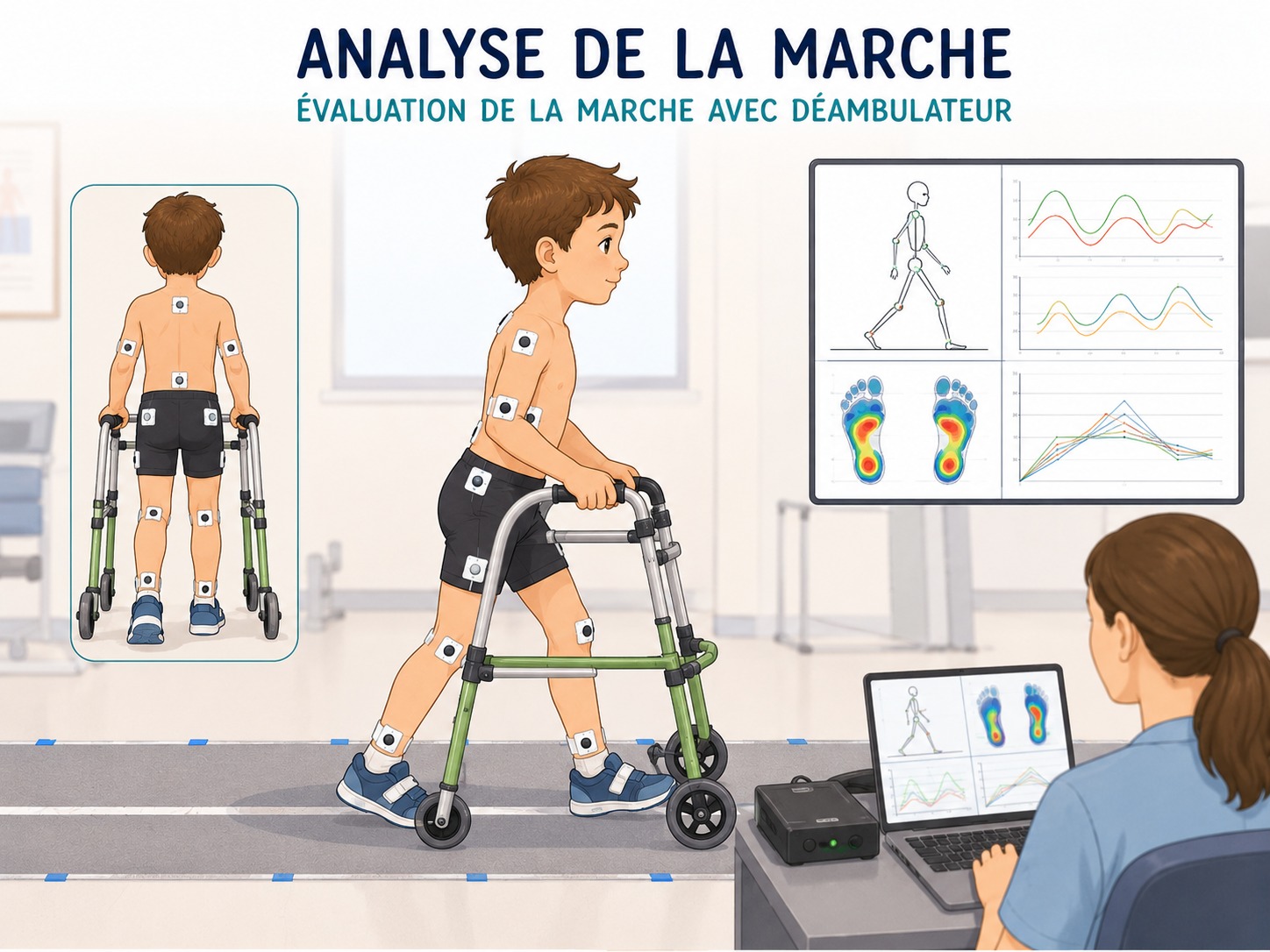
Injection sites must be carefully chosen so as not to weaken the child but, on the contrary, to free their movements. To make the procedure as effective as possible, a “gait analysis” is often offered to better identify the spastic muscles.
It is a video capture of the patient fitted with reflective markers, to examine how they move with or without aids (crutches, walker, etc.). It shows when abnormalities occur while walking and what causes them. It is widely used for children with cerebral palsy to help plan botulinum toxin (Botox) injection sites, or for pre- and post-operative assessments. A gait analysis can greatly influence surgical recommendations: this article highlights that surgeons’ recommendations differ before and after a gait analysis!
Baclofen (Lioresal)
Baclofen (Lioresal) is a muscle relaxant (it relaxes the muscles) and an antispasmodic (it fights muscle spasms). It therefore reduces muscle tone and the pathological reflexes that are significant in spasticity. The motor reflexes causing involuntary muscle contractions are thus stopped. As a centrally acting muscle relaxant, baclofen does not affect neuromuscular transmission.
This treatment can be given in two different ways:
- Orally: as tablets to swallow. This type of treatment must be monitored after it is started, to adjust the dose and watch for side effects (drowsiness, among others), which may prevent the dose from being increased.
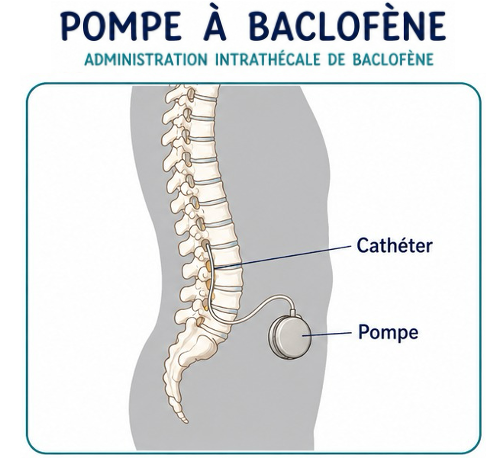
- The baclofen pump: a programmable device that continuously delivers the drug in liquid form directly into the cerebrospinal fluid around the spinal cord. This route is said to be more effective, without the side effects of oral treatment, because the doses are smaller thanks to the local action. The downsides? Besides the risk of infection linked to any surgery, the pump, a metal disc just under 10 cm in diameter, is placed under the skin of the abdomen during an operation. On our children’s slight bodies, it does not go unnoticed and needs some psychological adjustment…
Arnica and wintergreen massages
When we massage Enora, we often feel little lumps under our fingers in the calves and under the feet. These are small lumps of lactic acid, a sign that the muscle is too contracted. They need to be massaged for a long time to restore drainage.
To optimise the effect, arnica and wintergreen are known for their relaxing properties. There are massage oils containing these essential oils. Another tip: you can buy arnica mother tincture (Laboratoires Boiron®) and mix it with liniment.
Be careful with dosages: essential oils are not recommended for very young children, and even less so for people with a history of epilepsy or seizures.